


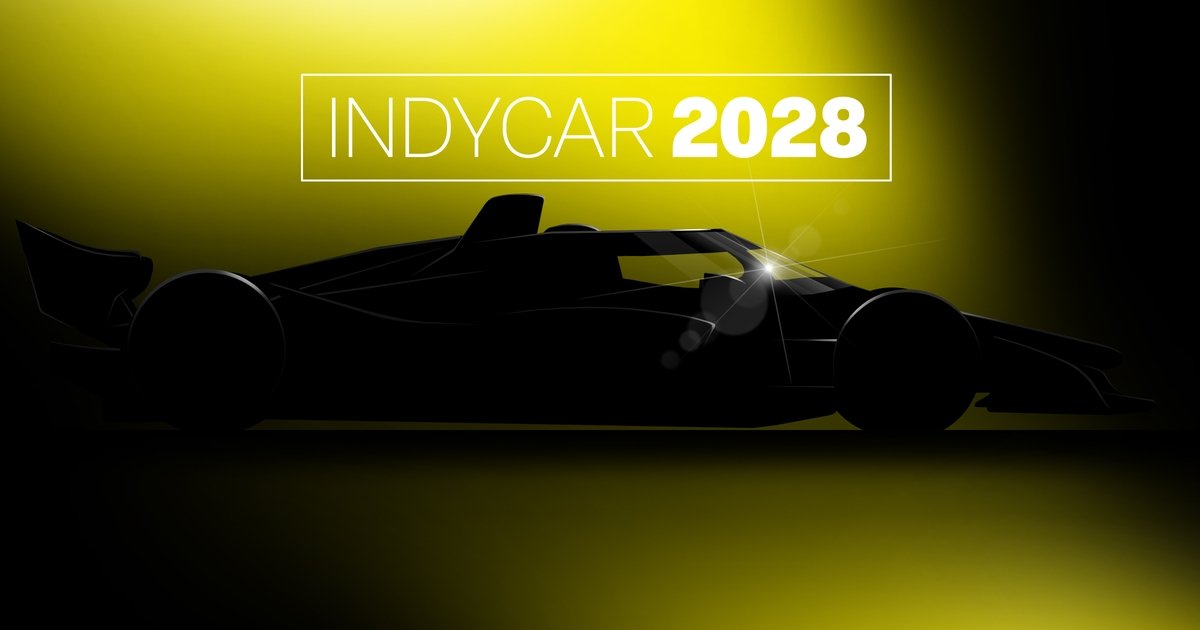
IndyCar Prepares for 2028: Engine and Chassis Revamp
As the IndyCar Series transitions towards the 2028 season, a thorough review of the new 2.4-liter twin-turbo V6 engine formula is underway. The forthcoming engines, slightly larger than the existing 2.2-liter units, will deliver increased power, emphasizing a blend of performance and efficiency.
Engine Specifications and Performance Goals
The new engine design will maintain core technologies from the current 2.2-liter V6, including high-pressure direct fuel injection and electronic wastegate-controlled twin-turbos. This evolution is carefully structured to ensure a transition without excessive costs. Power output targets include 800 hp from the pistons and 100 hp from hybrid energy recovery systems, projecting a combined total of 900 hp—an approximate increase of 100 hp over the current setup.
Mark Sibla, IndyCar’s Senior VP of Competition and Operations, stated, “The 2.4 allows us to bring down the stress that the engines are under… You can get more life from the engines.” Enhanced turbo boost limits under consideration may increase the current cap of 1.5 bar (21.76 psi) to 1.6 bar (23.2 psi) for specific track types.
Economic Considerations in Development
The shift to a hybrid powertrain underscores a broader industry trend, with auto manufacturers increasingly averse to backing expensive, bespoke engine development. The existing 2.2 engines have proven financially burdensome, prompting IndyCar to reevaluate its approach. Currently, Chevrolet and Honda are the sole manufacturers, providing support for a full-time field of 27 entries.
The implementation of a cost-effective engine lease program, with fees up to $1.45 million per entry, aims to alleviate some financial pressures. However, ongoing development costs remain high, thus the intention behind the 2.4 formula is to strike a balance between capability and affordability.
Redefining Return on Investment (ROI)
IndyCar’s current prominence lags behind NASCAR and Formula 1, affecting manufacturer participation and investment potential. The restructuring of the engine formula is designed not only to maintain technological relevance but also to improve ROI for participants. “We are adapting our rules to remain competitive in a changing landscape,” Sibla emphasized.
Hybrid Integration and Future Prospects
While hybrid components were initially slated for introduction in 2022, delays have pushed this timeline. By 2028, new chassis and engine designs are expected to coincide, allowing IndyCar to improve both performance metrics and economic viability.
The series’ approach seeks to implement a Balance of Performance (BoP) system, aimed at maintaining competitive equality without fostering costly arms races. This would involve torque sensors to monitor engine performance across manufacturers, thus enabling timely adjustments to maintain balance while curbing excessive spending.
Conclusion
The road to 2028 is marked by an emphasis on evolution over revolution, with established technologies at the forefront of the new engine design. As IndyCar navigates these changes, it aims to attract new participants through a more manageable financial model while also reassessing competitive strategies that safeguard the series’ future in the motorsport arena. The confirmation of engine specifications and homologation parameters is anticipated by the end of 2023, setting the stage for the upcoming season.
