


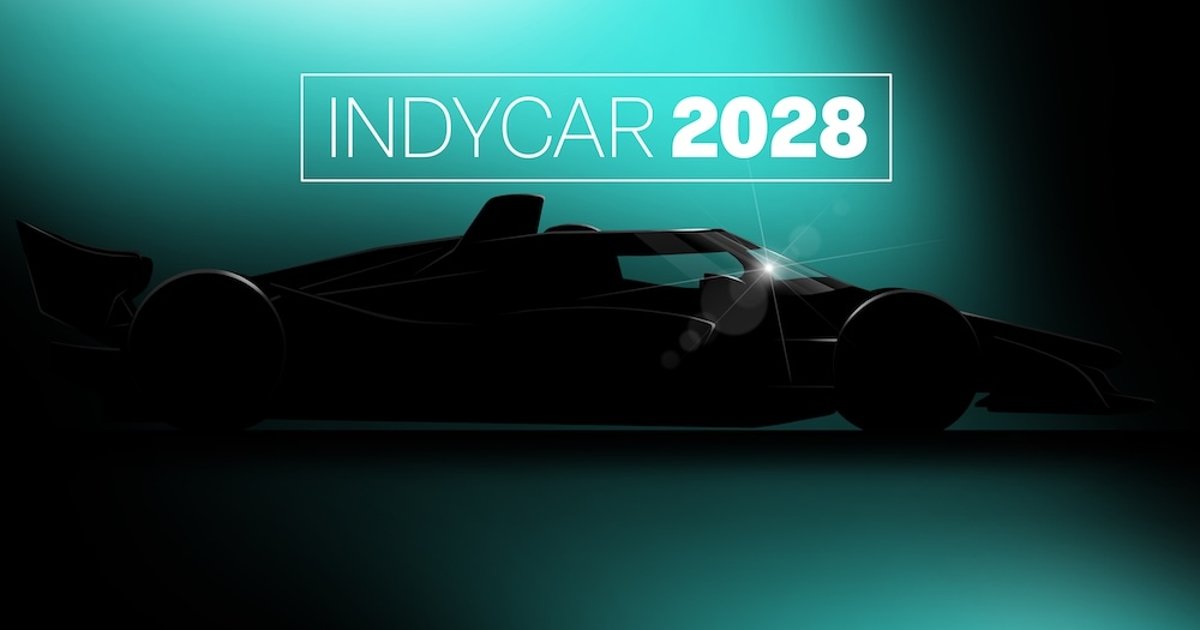
IndyCar’s 2028 Hybrid System: Key Developments and Future Directions
As the IndyCar Series prepares for the rollout of its 2028 chassis and hybrid engine systems, significant advancements are taking shape. Under the supervision of Mark Sibla, Senior Vice President of Competition and Operations, the series is finalizing its hybridization strategy—a crucial element of the upcoming regulations.
Hybridization Goals and Power Dynamics
IndyCar is currently developing a hybrid system with a target voltage rating of 60 volts or less, while enhancing energy storage capacity significantly. “Chevy and Honda deserve credit for rapidly putting together an effective and robust hybrid program,” said Sibla. The initial Version 1 system will make its debut in July 2024, using supercapacitors due to spatial constraints within the existing Dallara DW12 chassis, a design that did not account for hybrid technology when created over a decade ago.
For the new IR28 chassis, the second-generation energy recovery system (ERS) will fit in the same compact region behind the internal combustion engine, utilizing a structural bridge known as the bellhousing. This area has historically housed a single-turbo system from 2012-2013 before regulations transitioned to twin turbos in 2014.
Enhancements in Energy Storage
IndyCar has solicited proposals from vendors for advanced energy storage solutions, with existing technologies rapidly evolving. “We’re exploring storage options that will increase duration and capacity from five seconds of power deployment to a target of 10 seconds,” noted Sibla. The goal is to double the peak ERS power output to 120 horsepower, given the advancements in energy storage capabilities.
Current prototypes indicate that two groups are leading in technology solutions, both promising to reduce weight while enhancing storage. Discussions revolve around balancing increased horsepower against battery duration, underlining the need for a harmonious relationship between the two variables.
MGU Performance and Future Developments
The current MGU developed by Empel has untapped potential, capable of exceeding 100 horsepower. “With a more powerful ESS, we could push the MGU into the 100-150 horsepower range,” Sibla explained. The ongoing consideration is whether to continue with the existing MGU, modify it, or design an entirely new unit for Version 2.
IndyCar is also evaluating the future of its “Push to Pass” system. Sibla mentioned, “We’re examining whether to keep it alongside the hybrid or replace it entirely, focusing on optimal blending of the internal combustion engine and hybrid forces.”
Timeline and Next Steps
Prototypes of the new hybrid system should be ready in late spring 2024, coinciding with the onset of new-car testing. Sibla emphasized, “Our aim is to ensure the hybrid system is integrated into the prototype chassis, enabling comprehensive testing of all technical aspects.”
In summary, IndyCar is poised to redefine hybrid racing with its forthcoming 2028 regulations, enhancing both performance and sustainability through advanced technologies and innovative engineering solutions.
