


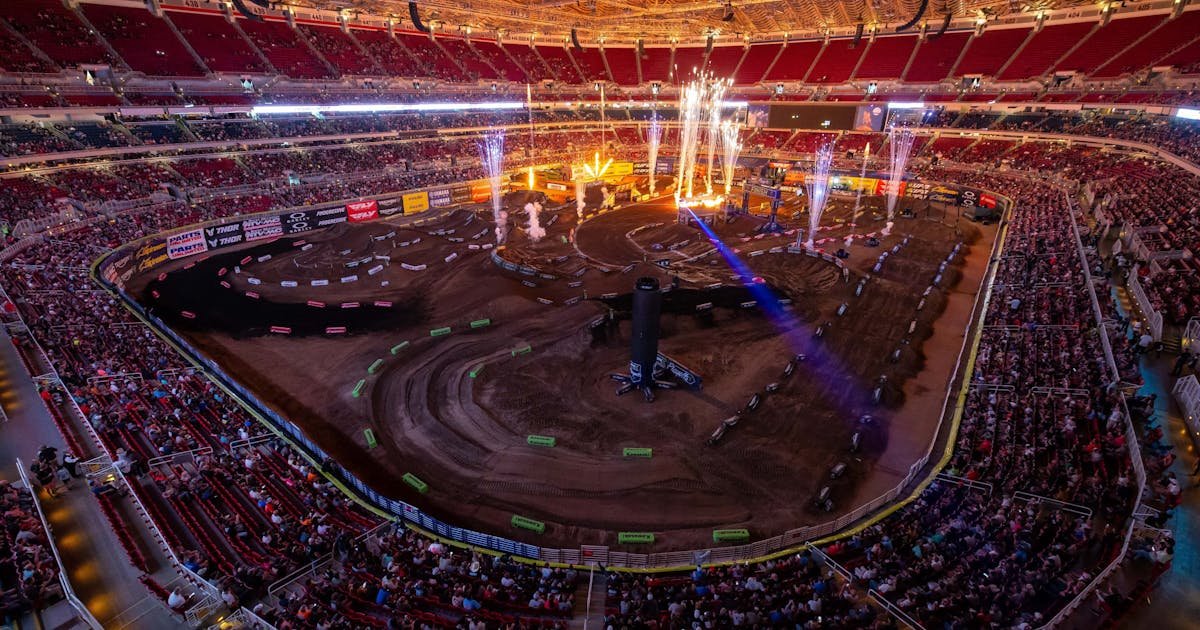
St. Louis Supercross Track Analysis: Key Insights and Strategies
The St. Louis Supercross circuit features a complex layout that will test rider skill and strategy during the upcoming race. Following an initial netted 180-degree right turn, competitors face a stadium-length rhythm section. Conventional strategy suggests a triple out, but the significant gap to the third jump may lead most riders to opt for a double, setting up for a triple onto a tabletop before doubling into the next corner. Advanced riders might consider a more aggressive 3-3-4-2 line, but execution during the race is uncertain.
The layout transitions to a right-angled 90-degree turn, leading into a standard supercross triple immediately followed by another sharp right. These lead-in corners to the finish line will be critical for position, as riders will aggressively defend the inside line.
Post-finish, riders navigate a 180-degree bowl berm, anticipating a quick rhythm section. The preferred approach appears to be stepping over the first tabletop followed by a 3-1 sequence. Alternatively, a difficult on-off approach could yield quicker times if executed correctly.
Next, competitors encounter a whoops section that presents two options: blitzing or jumping. Riders aiming to blitz will engage deeper into the berm for a slingshot effect, while those opting to jump will utilize the lowest ruts to minimize required speed.
After navigating the triple, riders will weave across the start straight through a series of three short chutes, reminiscent of the clash between Jordon Smith and Haiden Deegan in Detroit 2023.
In the final segment, racers will again choose between a step-on step-off or a double to flat, with data analysis tools such as Dartfish likely used to determine the fastest approach. The concluding bowl berm leads back to the first corner, establishing the format for lap two.
As the riders prepare to tackle the unique challenges presented by the St. Louis track, strategic decisions will be paramount in determining race outcomes.
