






Spanish Grand Prix Report: McLaren Triumphs Amidst Red Bull’s Strategic Gamble
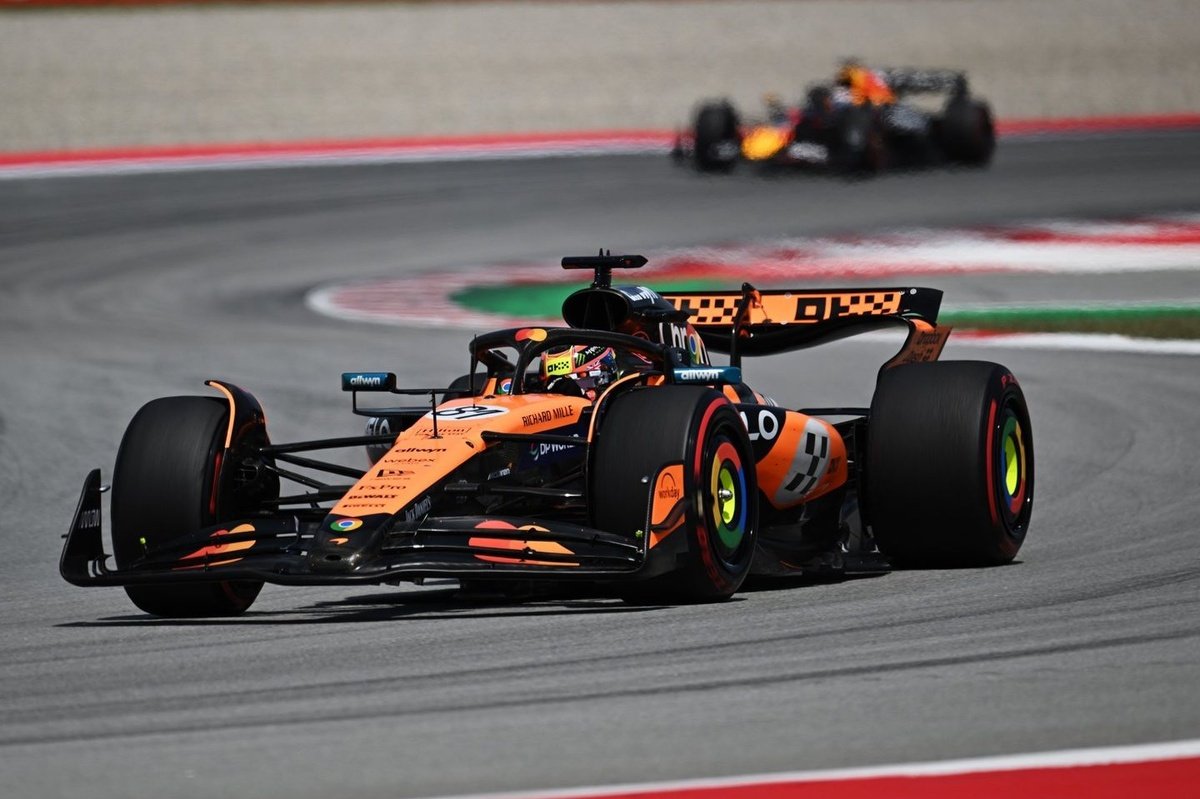
In a high-stakes Spanish Grand Prix marked by extreme track conditions and aggressive tire strategies, McLaren emerged victorious with Lando Norris securing a dominant first place and Oscar Piastri clinching second. The race was characterized by surface temperatures nearing 50°C, which made tire management critical.
Red Bull Racing adopted an unconventional three-stop strategy, targeting McLaren’s renowned long-stint tire conservation. This approach was deemed necessary as Lando Norris displayed impressive pace, capable of overtaking Max Verstappen on track—contrasting sharply with last year’s race dynamics. Red Bull Team Principal Christian Horner acknowledged: “Given how the race was unfolding, we chose to make three stops… we saw that in a direct battle it wouldn’t be possible to counter the pace and tire-management advantage McLaren had.”
Early in the race, Verstappen maintained a close distance to McLaren’s leaders. However, as he switched to medium tires during his second pit stop, the urgency to respond increased for McLaren. Horner’s strategy was rooted in the RB21’s strengths, while McLaren remained wary of the potential undercut. Piastri’s race engineer, Tom Stallard, highlighted their concern: “When we saw that Max was on a three-stop strategy, we thought it wouldn’t be a problem… but the reality is, he was fast.”
Despite Red Bull’s strategy benefiting from the soft tires’ effectiveness on the Barcelona circuit, McLaren managed to assert dominance. Piastri demonstrated remarkable pace during the second stint, particularly in critical sections of the track, boosting his lap times significantly when instructed to push. He averaged a competitive 1m20.0s, eventually extending his lead over Verstappen who was stuck battling Norris.
Piastri’s race highlighted the ongoing improvements in McLaren’s performance, allowing them to comfortably counter Red Bull’s tactical maneuvers. Piastri’s ability to handle tire stress better than Norris, who reported understeering issues, proved pivotal. “We were told we had to push more,” Norris stated, reflecting the team’s growing concerns as Verstappen closed in.
As the race drew to a close, Red Bull attempted to undercut McLaren by pitting Verstappen for a third time. McLaren swiftly responded, bringing Norris in immediately to maintain their advantage. The strategic pit stop battle underscored McLaren’s positional advantage of having two cars versus Red Bull’s lone challenger.
Ultimately, McLaren’s focus on tire life and strategic adaptability allowed the team to claim a significant 1-2 finish, positioning them strongly as contenders in the championship standings, with Red Bull reflecting on a race where their daring tactics barely fell short.


