





Verstappen’s Controversial Behavior Under Scrutiny After Spanish GP Collision
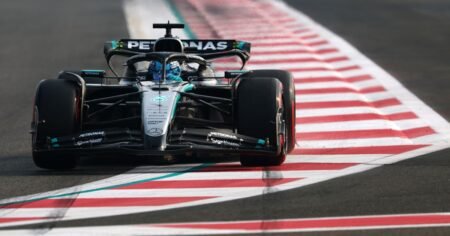
In a dramatic turn of events at the Spanish Grand Prix, Max Verstappen’s on-track conduct has ignited significant debate regarding his racing ethos and the consistent leniency of the stewards. The Red Bull driver, already acclaimed for his extraordinary talent and racecraft, showcased his audacity when he collided with George Russell after initially conceding position at Turn 5.
Verstappen’s strategy for regaining control, however, raised serious questions about sportsmanship. As Russell surged ahead, Verstappen noticeably slowed to allow him to pass before accelerating and making contact—a move many observers, including media and fans, deemed intentional. The stewards, in their assessment, concluded, “The collision was undoubtedly caused by the actions of Car 1,” yet they only issued a penalty akin to those for incidental contact.
Historically, Verstappen’s conduct has evoked scrutiny. Notably, he brake-tested Lewis Hamilton during the 2021 Saudi Arabian GP in a tense title battle, and a pattern of confrontational tactics has persisted without stringent repercussions. Critics argue that such behavior undermines the integrity of the sport and question whether the governing bodies fail to appropriately address what appears to be a growing trend of unsportsmanlike conduct.
The aftermath of the Barcelona clash starkly contrasts the stewards’ handling of George Russell’s recent five-second penalty for a relatively minor infraction in Monaco. This inconsistency in penalty enforcement has prompted calls for reevaluation of how driver behavior is adjudicated.
Verstappen, a polarizing figure since his 2015 debut, often justifies his aggressive racing style as a mark of his competitive spirit. However, the consensus among many in the paddock is that a more disciplined approach is needed to ensure the race remains safe and fair.
The governing authorities face pressure to more rigorously address intentional collisions and safeguard the integrity of Formula 1 as it evolves in complexity and challenge. In light of recent events, a critical reassessment of penalty structures and enforcement is imperative for maintaining the sport’s standards.