







Track Analysis: Houston Supercross Layout
The Houston Supercross circuit presents a challenging layout characterized by its long sand sections, rhythmic jumps, and strategic corners, echoing features from previous events.
Track Description and Sections
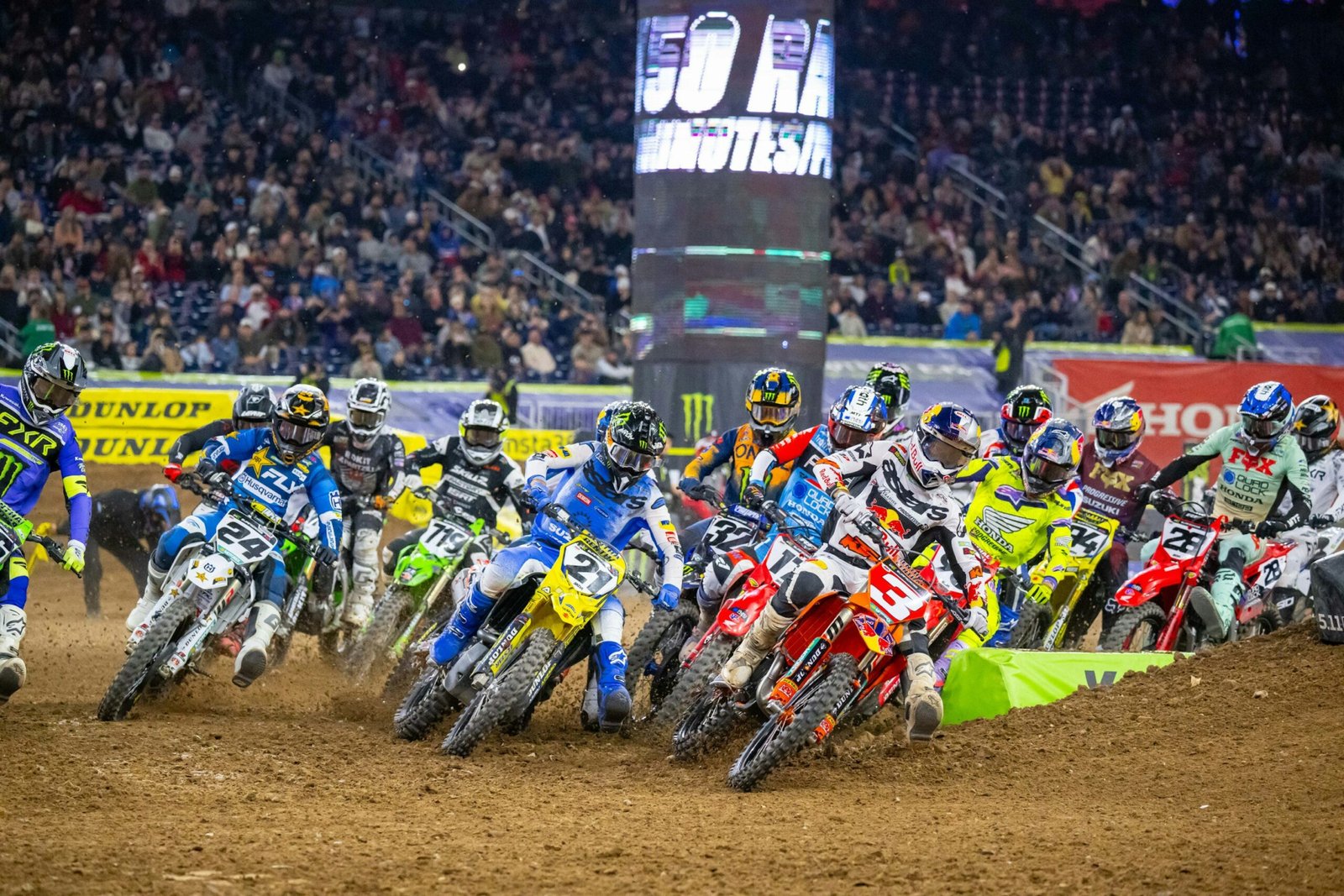
The race begins with an explosive start across the mechanics’ area leading into two long, 180-degree sand corners. These corners, reminiscent of the Anaheim 2 setup, require sharp focus on line choice, particularly given the track’s maintenance that can create nuanced bumps and berms.
Riders will exit the second sand corner onto the finish line jump, transitioning into a netted left-hand bowl berm. A lengthy rhythm section runs parallel to the stadium wall, offering two distinct line options:
- Option One: Jump over the tabletop, followed by a 3-3-3 sequence.
- Option Two: Step onto and off the tabletop, executing a 3-3-2 and negotiating the subsequent 90-degree left turn.
The effectiveness of these lines will depend heavily on rider precision, especially when approaching the immediate triple jump afterward.
Critical Jumps and Whoop Section
After navigating through a basic 3-3 sequence into a tight left-hand turn, riders must execute a crucial double jump that spans the first corner. Success in landing this double is essential, as it generates the speed necessary for the following whoops section. Given that these whoops are typically hard-packed, blitzing them is favored over jumping, as the entry speed from the double offers a significant advantage.
Strategic Areas
Further down, a 180-degree right leads into another rhythm section mirroring Houston’s previous configurations. Here, the optimal line appears to be a 3-3-2, setting up for a strategic traversal across the first corner.
The track concludes with a left turn setting up a triple jump, positioning riders to launch into their second lap. Competitors will need to adapt quickly, as the layout’s intricacy promises to test both their technical skills and race strategy.
As the event approaches, teams and riders will rely on precise practice sessions to master these challenging elements and optimize their performance.


