


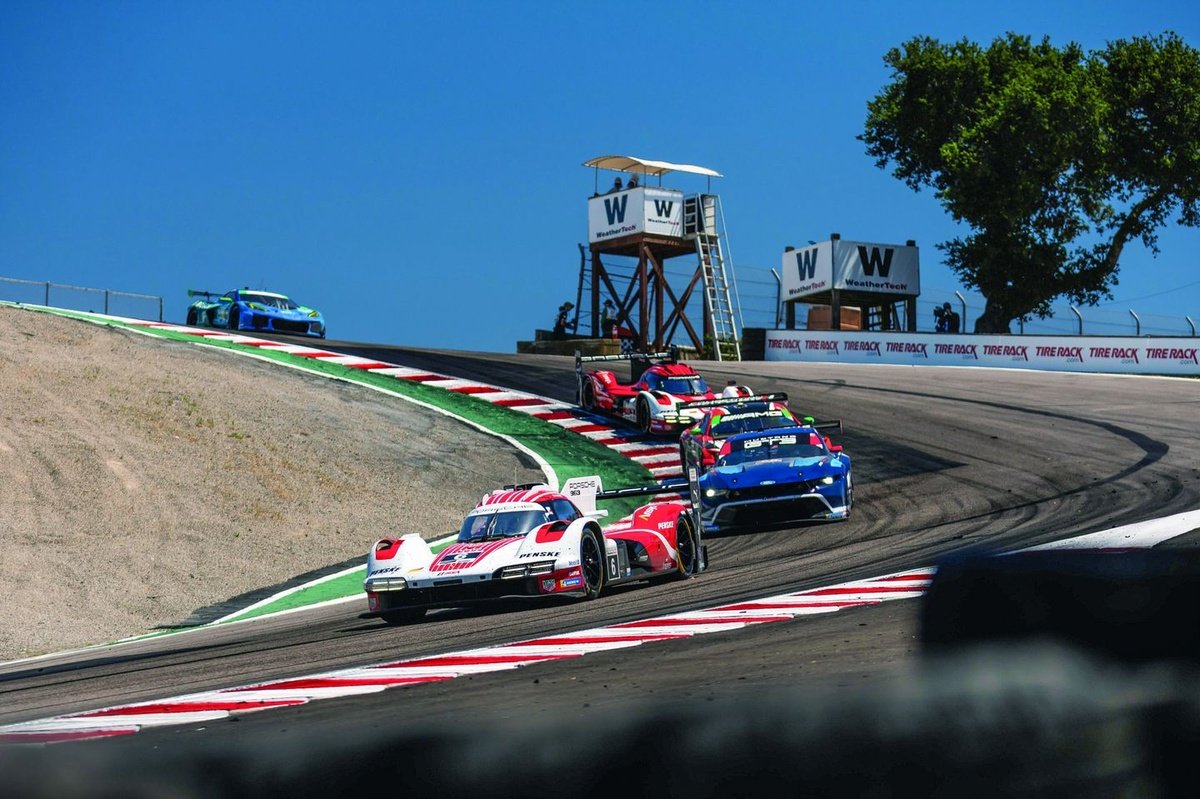
IMSA Introduces Stricter Communication Rules Ahead of Daytona 24 Hours
In a move reflecting recent changes in the World Endurance Championship (WEC), the International Motor Sports Association (IMSA) has enacted stringent rules regarding public communication about the Balance of Performance (BoP) ahead of the 64th Daytona 24 Hours. These rules target drivers, teams, and manufacturers, providing IMSA with the discretion to penalize any critical remarks made through various media platforms.
New Communication Regulations
Article 2.2.3 of the Sporting Regulations now prohibits all participants from attempting to influence the BoP process or making any public comments regarding it. This rule emphasizes IMSA’s intent to maintain the integrity and confidentiality of BoP determinations, with potential penalties applicable at any stage of the competition, reflecting IMSA’s increased control over team communications.
Daytona 24 Hours BoP Insights
The BoP plays a crucial role in IMSA, particularly at Daytona, where car performance is heavily influenced by track position, tire strategy, and restarts. The upcoming event will feature a two-stage BoP system that differs from the WEC’s fixed threshold. Instead, IMSA employs a transition zone, adjusting power levels between 230 and 240 kph based on a linear progression established in 2025.
The highly competitive nature of the Daytona circuit necessitates keen performance above 240 kph, particularly for overtaking opportunities.
2026 GTP BoP Adjustments
With significant updates to the four LMDh cars participating in the 2026 Daytona 24 Hours, establishing the BoP has proved challenging. Benchmarks from a November test at Daytona International Speedway, combined with simulation data, were utilized in formulating the current BoP table. While a final update before the race is possible, the figures reflect data from both the “Roar before the 24” and the race.
Power-to-Weight Ratios (<230 kph):
- Cadillac V-Series.R – 1.987 kg/kW
- Acura ARX-06 – 2.002 kg/kW
- BMW M Hybrid V8 – 2.004 kg/kW
- Aston Martin Valkyrie – 2.005 kg/kW
- Porsche 963 – 2.029 kg/kW
Power-to-Weight Ratios (>240 kph):
- Aston Martin Valkyrie – 1.981 kg/kW
- Porsche 963 – 1.998 kg/kW
- BMW M Hybrid V8 – 2.035 kg/kW
- Cadillac V-Series.R – 2.046 kg/kW
- Acura ARX-06 – 2.057 kg/kW
Cadillac leads the low-speed range, while Porsche excels above 240 kph, suggesting a nuanced balance in performance across the field.
Comparative and Resetting Challenges
Comparatively, adjustments from the 2025 BoP indicate remarkable shifts, with the BMW M Hybrid V8 facing the most substantial updates affecting its performance metrics. Notably, the Cadillac’s base weight has been reduced to address prior performance disparities, as it lagged behind last year’s fastest times.
As the Daytona 24 Hours approaches, IMSA remains vigilant in refining the BoP to reflect extensive changes in car specifications. The exact outcomes remain highly anticipated, as teams adapt to these new regulations and performance parameters.
Overall, as IMSA approaches the 2026 season, the enforced protocols and refined BoP metrics underscore the ongoing evolution of competitive balance in top-tier endurance racing.
