


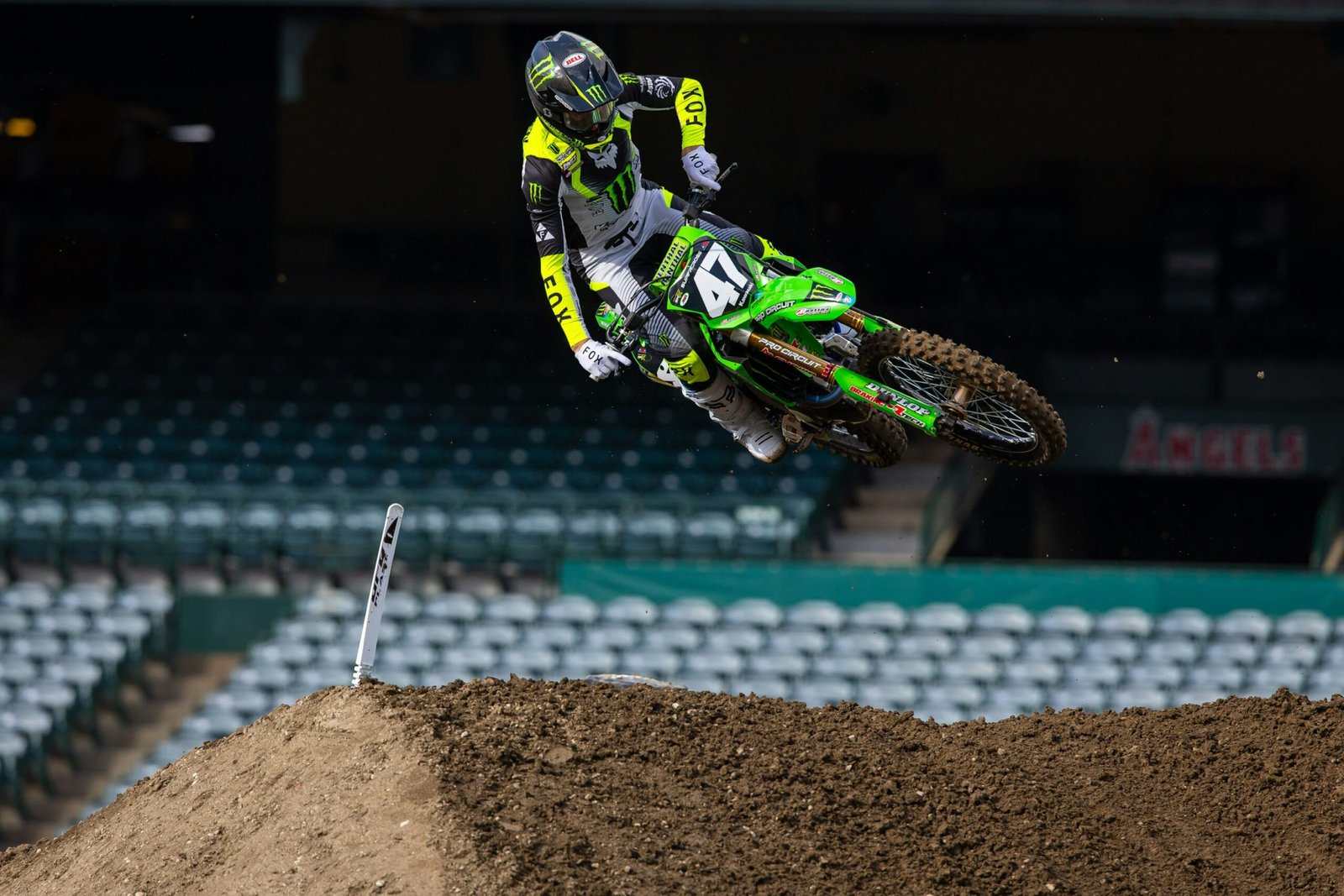
Race Summary: Anaheim Supercross
Anaheim, CA – The Anaheim Supercross showcased a dramatic shift in track conditions from day to night. Riders navigated a course that evolved significantly, with early qualifying sessions favoring an inside line. However, post-rework by the track crew introduced a robust berm on the outside, allowing competitors to gain substantial momentum, as highlighted in the main event by Hunter Lawrence, who initially overlooked this advantageous line.
In heat racing, Levi Kitchen experienced a harrowing moment when his bike executed a front flip during a crash. Remarkably, he emerged uninjured and still qualified. The incident underlined the risks associated with track modifications; the jump face’s softer dirt, combined with the aggressive mechanics of today’s bikes, contributed to this precarious situation. Changes to jump dynamics have historically resulted in significant incidents, evoking past memories of the Orlando 2006 and Daytona complications.
Kitchen’s race effort was hindered when his starting device malfunctioned, remaining locked during the start. This mechanical issue can occur amidst the high-pressure demands placed on these systems, where excessive traction can lead to wheelies. A failure to compress the bike properly during the start can leave the device engaged. Riders typically manage this risk by strategically navigating jumps or bumps to release the lock, assuming no mechanical faults are present.
Overall, the event highlighted the need for precise handling of mechanical components and adaptability to changing track conditions, pivotal elements in achieving success in modern motocross.
