








12 Years Since Victory: A Look at Fernando Alonso’s F1 Journey
Introduction:
Fernando Alonso, the seasoned Spaniard, marks a significant milestone this year—12 years since his last victory in Formula 1. Despite achieving impressive statistics during his 24-year career, including 32 race wins and two World Championships, Alonso has not crossed the finish line first since the 2013 Spanish Grand Prix.
Last Victory Context:
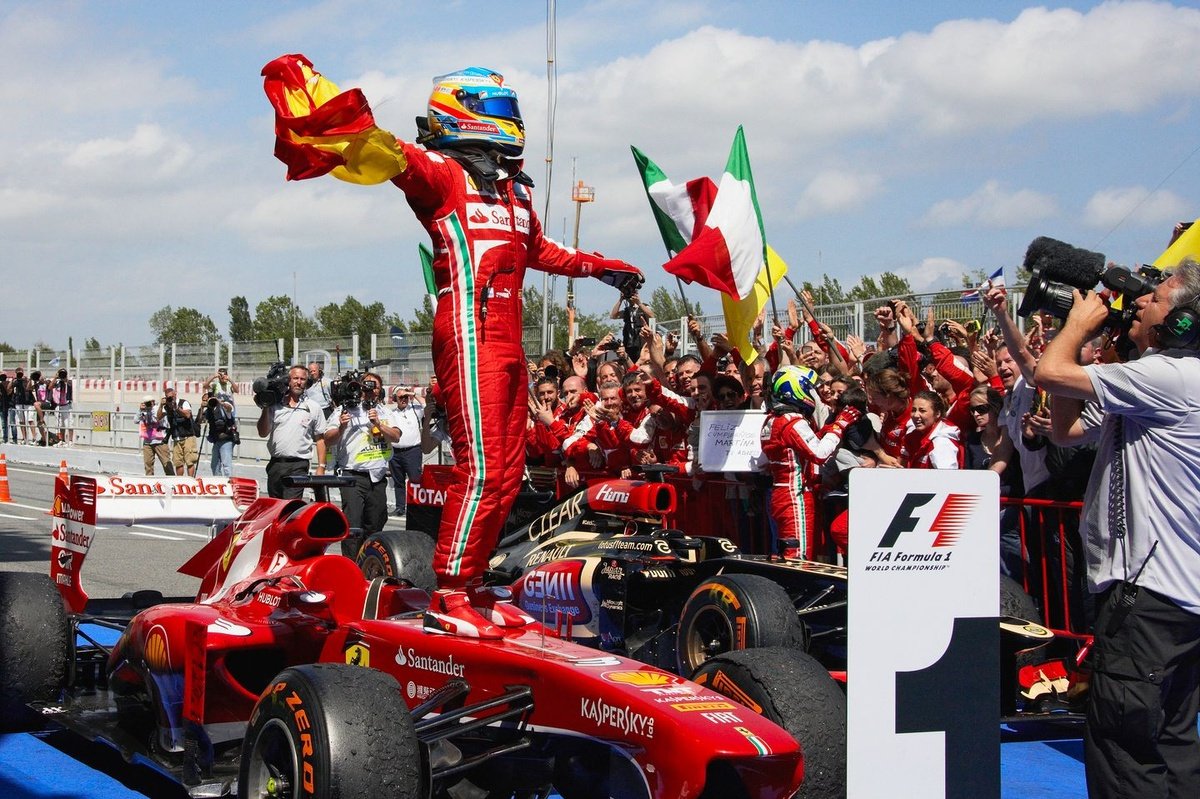
Alonso’s last triumph occurred on May 12, 2013, while driving for Ferrari, where he famously surged from fifth to first. Since then, Formula 1 has undergone substantial transformations.
Championship Landscape
In the years following Alonso’s last win, four drivers have ascended to world champion status. Sebastian Vettel clinched the title in 2013 with Red Bull, followed by a period of Mercedes dominance featuring Lewis Hamilton and Nico Rosberg, and more recently, Max Verstappen has secured four consecutive titles for Red Bull starting in 2021.
Technical Innovations
The F1 landscape has been significantly reshaped by advancements in technology, particularly the introduction of hybrid power units in 2014. These V6 turbo-hybrid engines incorporate MGU-K and MGU-H systems to enhance energy efficiency—making them among the most thermally efficient in the automotive industry. Alonso’s transition to the hybrid era was rocky; notably, the Honda power unit during his time at McLaren in 2015 lacked competitiveness, drawing unflattering comparisons to lower-tier engines.
Safety Enhancements
The introduction of the Halo device in 2018 improved driver safety dramatically, following serious incidents, including the tragic accident involving Jules Bianchi in 2014. The Halo has since proven its worth in high-profile crashes, safeguarding drivers during incidents that could have been fatal.
Media Influence
The 2018 series Drive to Survive revitalized global interest in F1, with behind-the-scenes access humanizing drivers and teams. This shift has transformed how fans engage with the sport, emphasizing personal narratives alongside on-track action.
Team Evolution
The grid has also seen significant changes in team dynamics. From 2013 to today, two teams—Caterham and Marussia—have exited F1, while several others have undergone rebranding. Notable transformations include Lotus rebranding to Renault and then Alpine, and Force India transitioning to Aston Martin.
Regulatory Changes
The introduction of ground effect regulations in 2022 aimed to enhance competition by improving car aerodynamics and reducing turbulent air. While this change facilitated closer racing, Red Bull capitalized on the new rules to maintain its dominance.
Track Developments
The calendar has expanded remarkably since 2013. In contrast to the past lineup that included races in Malaysia and India, modern F1 has introduced events in new locations, including Miami and Las Vegas, along with returning favorites like the Netherlands.
Conclusion:
As Alonso continues to drive for Aston Martin and reflects on a transformative era of Formula 1, his legacy remains influential. The sport has changed fundamentally in the past decade, yet the competitive spirit of racing lives on. With Alonso’s vast experience, he remains a vital participant in F1’s evolving narrative.


