
Close Menu
American MotorspotAmerican Motorspot
  • 2027 Guides
  • Formula 1
  • NASCAR
  • IndyCar
  • IMSA
  • Motocross
  • Sports Cars
Trending
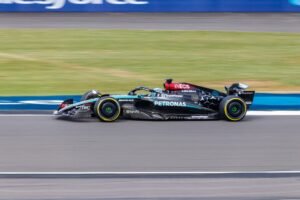
George Russell (Mercedes), 2024 British Grand Prix, in Silverstone.

Russell takes Qatar Grand Prix pole as Mercedes lock out the front row

5 hours ago
The 2024 Chevrolet Detroit Grand Prix on the Detroit street circuit in Detroit , Michigan ( United States ).

Dallara IR-28 rollout: IndyCar’s 2028 car timeline from manufacturer tests to team deliveries

14 hours ago
Kimi Antonelli driving the Mercedes W16 in second practice at the 2025 Japanese Grand Prix

Antonelli sweeps Qatar Friday practice as Mercedes go one-two in both sessions

1 day ago
Facebook X (Twitter) Instagram
American MotorspotAmerican Motorspot
  • 2027 Guides
  • Formula 1
  • NASCAR
  • IndyCar
  • IMSA
  • Motocross
  • Sports Cars
American MotorspotAmerican Motorspot
Home»Formula 1
Formula 1

These 10 outlawed tech innovations rocked F1

American Motorspot NewsroomBy American Motorspot NewsroomMay 9, 2025No Comments
Facebook Twitter Pinterest LinkedIn Email Copy Link Telegram Tumblr

Innovations Outlawed in Formula 1: A Historical Overview

Summary: Formula 1’s relentless pursuit of speed has driven technical innovation while also prompting the sport’s governing body, the FIA, to impose strict regulations. This report examines ten groundbreaking innovations that were ultimately banned from competition, shaping the landscape of F1 racing.

1. Brabham BT46B – ‘The Fan Car’

The Brabham BT46B, famously nicknamed the "Fan Car," utilized a fan integrated into the car to enhance downforce. Debuting at the 1978 Swedish Grand Prix, the fan, connected directly to the gearbox, generated significant performance gains, allowing Niki Lauda to secure victory. However, regulatory changes in 1979 led to the car’s withdrawal from competition.

2. Ground Effect

Pioneered by Lotus in the 1970s, ground effect technology involved skirts that sealed the car’s underside to maximize downforce. Although it led to spectacular performance improvements, the safety risks associated with sudden loss of downforce forced the FIA to ban ground effect cars after the 1982 season, using a new interpretation of the design in 2022.

3. Six-Wheeled Cars

The Tyrrell P34, introduced in 1976, featured four front wheels intended to enhance traction and braking. Despite achieving notable successes, including a race win, the car was rendered obsolete by a 1980 technical directive limiting cars to four wheels.

4. Active Suspension

Active suspension systems emerged in the early 1990s, enhancing grip and performance by dynamically adjusting suspension settings. Originating with Lotus, it provided competitive advantages until its complexity and cost led to its ban in 1994.

5. Mass Dampers

Renault’s R25 utilized a tuned mass damper during the 2005 season, significantly improving stability. Despite delivering performance advantages, protests led to its prohibition after the 2006 German Grand Prix, as it was deemed to enhance aerodynamic output unduly.

6. Double Diffuser

In 2009, the double diffuser design exploited regulatory loopholes to maximize downforce. Brawn GP’s successful implementation played a crucial role in their championship victory, leading to widespread adoption and eventual regulation changes in 2011.

7. F-Duct

First used by McLaren in 2010, the F-duct allowed drivers to modify airflow for reduced drag and improved straight-line speed. Due to safety concerns regarding driver operation while steering, it was banned for the 2011 season.

8. Double DRS

Mercedes’ double DRS concept, introduced for the 2011 season, aimed to simultaneously stall front and rear wings to decrease drag. However, complexities in design and competition led to its outlawing in 2013.

9. DAS System

Mercedes unveiled the Dual-Axis Steering (DAS) system in 2020, enabling drivers to adjust front wheel alignment for improved contact patch and tire warming. Although legal that season, it was banned for 2021, closing the door on similar innovations.

10. Flexible Wings

Recently, the FIA has focused on addressing the issue of flexible wings, which have shown to alter their aerodynamic profile under load. Regulatory changes in 2024 aim to restrict wing flex and impose stricter testing prerequisites.

Conclusion: The evolution of Formula 1 technology reflects the sport’s innovative spirit and the FIA’s commitment to safety and fairness. As teams continue to push boundaries, the balance between performance and regulation remains a critical aspect of racing at the highest level.

Share. Facebook Twitter Pinterest LinkedIn Tumblr Email

Keep Reading

George Russell (Mercedes), 2024 British Grand Prix, in Silverstone.

Russell takes Qatar Grand Prix pole as Mercedes lock out the front row

Kimi Antonelli driving the Mercedes W16 in second practice at the 2025 Japanese Grand Prix

Antonelli sweeps Qatar Friday practice as Mercedes go one-two in both sessions

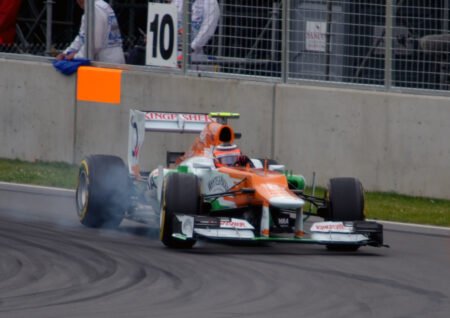
Nico Hulkenberg locking up at the Circuit Gilles-Villeneuve hairpin during practice for the 2012 Canadian Grand Prix

2027 Canadian Grand Prix: May 21–23 in Montréal, a Sprint weekend

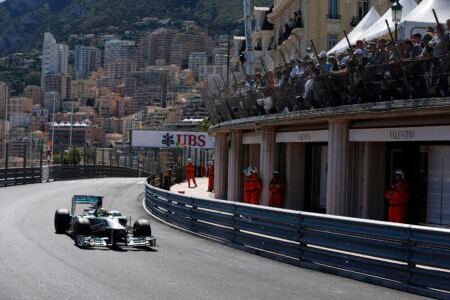
Nico Rosberg driving a Mercedes Formula 1 car at the 2013 Monaco Grand Prix in Monte Carlo

2027 Monaco Grand Prix: June 4–6, first Monaco Sprint, on Apple TV

A Formula 1 car on track during a practice session at the Bahrain International Circuit in 2010

2027 F1 pre-season testing: February 24–27 in Bahrain

Formula 1 cars on the Las Vegas Strip Circuit during a Grand Prix

2027 Las Vegas Grand Prix: November 18–20, a Saturday night race

Add A Comment

Comments are closed.

Editors Picks

The 2024 Chevrolet Detroit Grand Prix on the Detroit street circuit in Detroit , Michigan ( United States ).

Dallara IR-28 rollout: IndyCar’s 2028 car timeline from manufacturer tests to team deliveries

14 hours ago
Kimi Antonelli driving the Mercedes W16 in second practice at the 2025 Japanese Grand Prix

Antonelli sweeps Qatar Friday practice as Mercedes go one-two in both sessions

1 day ago
Jack Harvey during the 2025 IndyCar weekend at Road America

Jack Harvey steps away from 2027 Indy 500 to focus on recovery, joins DRR as Special Advisor

2 days ago
NASCAR Cup Series cars racing in the 2016 Bass Pro Shops Night Race at Bristol Motor Speedway, with Denny Hamlin leading

2027 Bristol dates: April 11 on FOX Sports, Night Race on August 14

2 days ago
NASCAR Cup Series cars racing in a pack between Turn 4 and the tri-oval at Talladega Superspeedway in 2008

2027 Talladega dates: Jack Link’s 500 on April 25, YellaWood 500 on October 31

2 days ago

Latest Articles

Nico Hulkenberg locking up at the Circuit Gilles-Villeneuve hairpin during practice for the 2012 Canadian Grand Prix

2027 Canadian Grand Prix: May 21–23 in Montréal, a Sprint weekend

2 days ago
Nico Rosberg driving a Mercedes Formula 1 car at the 2013 Monaco Grand Prix in Monte Carlo

2027 Monaco Grand Prix: June 4–6, first Monaco Sprint, on Apple TV

2 days ago
NASCAR Cup Series cars racing in the 2024 Coca-Cola 600 at Charlotte Motor Speedway

2027 Coca-Cola 600: May 30 at Charlotte, on Prime Video

2 days ago
American Motorspot

Coverage

  • Formula 1
  • NASCAR
  • IndyCar
  • IMSA
  • Motocross
  • Sports Cars

2027 Guides

  • F1 Calendar
  • NASCAR Schedule
  • IndyCar Schedule
  • IMSA Schedule
  • Supercross Schedule
  • All Guides

About

  • About
  • Masthead
  • Editorial Policy
  • Contact
  • Privacy Policy
  • Terms

Follow

Facebook X (Twitter) Instagram

© 2026 American Motorspot. All rights reserved.

  • Privacy Policy
  • Terms
  • Contact Us

Type above and press Enter to search. Press Esc to cancel.