








Mercedes F1 Team’s Future Driver Line-up: A Focus on Max Verstappen and Current Talents
Overview
As Toto Wolff navigates potential changes to the Mercedes F1 line-up for 2026, speculation grows regarding a high-profile acquisition—Max Verstappen. Currently under contract with Red Bull until 2028, acquiring the reigning champion remains unlikely, yet Wolff’s acknowledgment of ongoing discussions keeps the door partially ajar.
Current Contract Context
Max Verstappen’s link with Red Bull complicates any hypothetical move to Mercedes, particularly with Red Bull’s investments in their driver lineup. Should Mercedes fail to announce their 2026 configuration soon, speculation will continue to swirl. George Russell, current lead driver for Mercedes, confirmed that Verstappen is indeed on Wolff’s radar.
Driver Pairing Considerations
A primary question looms: who should accompany Verstappen if he joins? Insights from various motorsport analysts provide contrasting perspectives on the optimal line-up.
1. Verstappen and Kimi Antonelli: Strategic Long-Term Planning
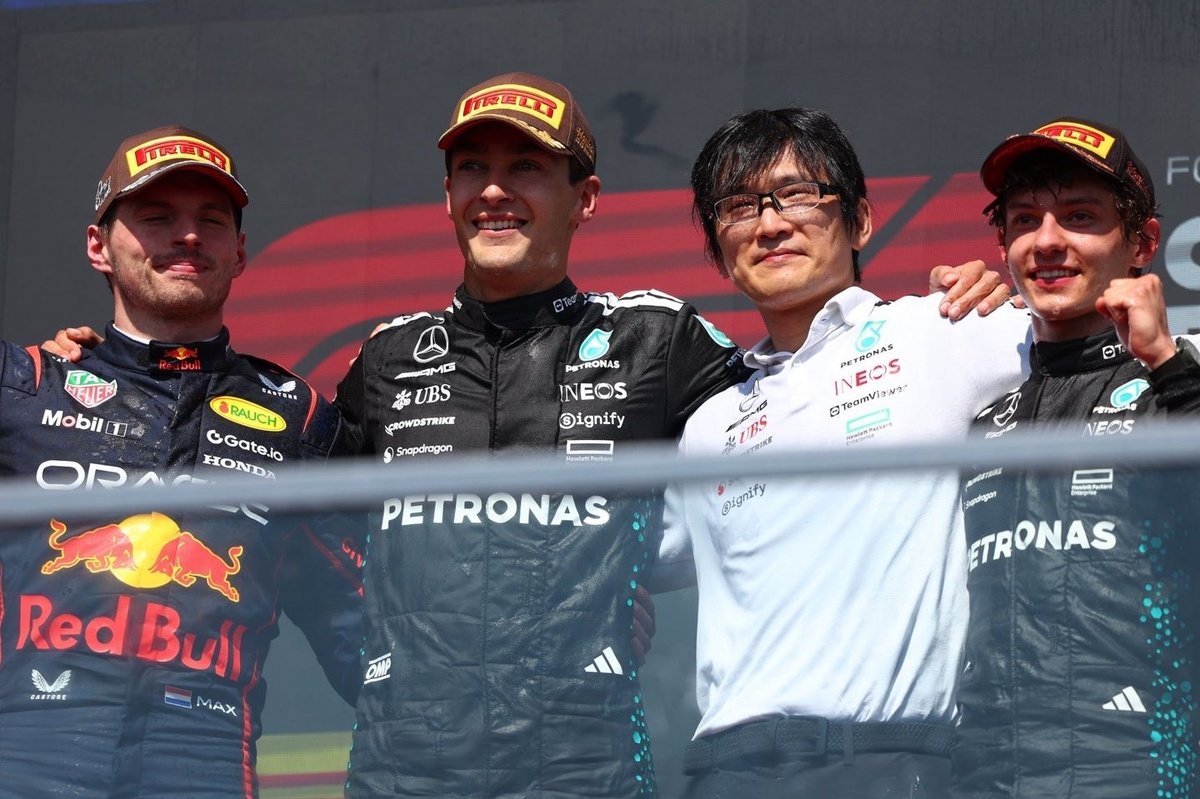
Ronald Vording advocates for a Verstappen-Antonelli pairing, suggesting it aligns short-term competitiveness with long-term developmental strategies for Mercedes. Antonelli, only 18, has demonstrated significant potential this season, with notable performances including a podium finish in Canada.
Vording argues that positioning Antonelli alongside a seasoned champion like Verstappen could accelerate his growth while maintaining team performance. However, concerns exist about the impact of Verstappen’s competitive dominance on Antonelli’s development.
2. Verstappen and Russell: Tapping into Proven Talent
Oleg Karpov presents a strong case for Russell’s retention, emphasizing his competitive acumen and personal growth within the Mercedes framework. Russell showcased his capability last season, besting teammate Lewis Hamilton during their rivalry. If Wolff can secure Verstappen, Karpov posits that pairing him with Russell would deliver maximum performance synergy, given their established rapport.
Karpov acknowledges potential implications for Antonelli, suggesting that a loan to a team like Alpine could foster further development without stifling his career ambitions.
3. Russell and Antonelli: A Focus on Stability
Ben Hunt contends that Mercedes should maintain its current line-up, emphasizing stability amidst impending regulatory changes. He warns against the risks of pairing Antonelli with Verstappen, given Verstappen’s historical impact on teammate dynamics—often sidelining competition within the same garage.
Hunt underscores the risk of undermining Antonelli’s potential at an early stage if paired with Verstappen, advocating instead for a continued partnership with Russell, thus ensuring a steady forward trajectory in the evolving F1 landscape.
Conclusion
As the 2026 season approaches, Wolff’s decisions will shape Mercedes’ competitive landscape for years to come. While the allure of securing Verstappen is undeniable, the overarching strategy must consider the balance of immediate performance against long-term development, especially for emerging talents like Antonelli.


