









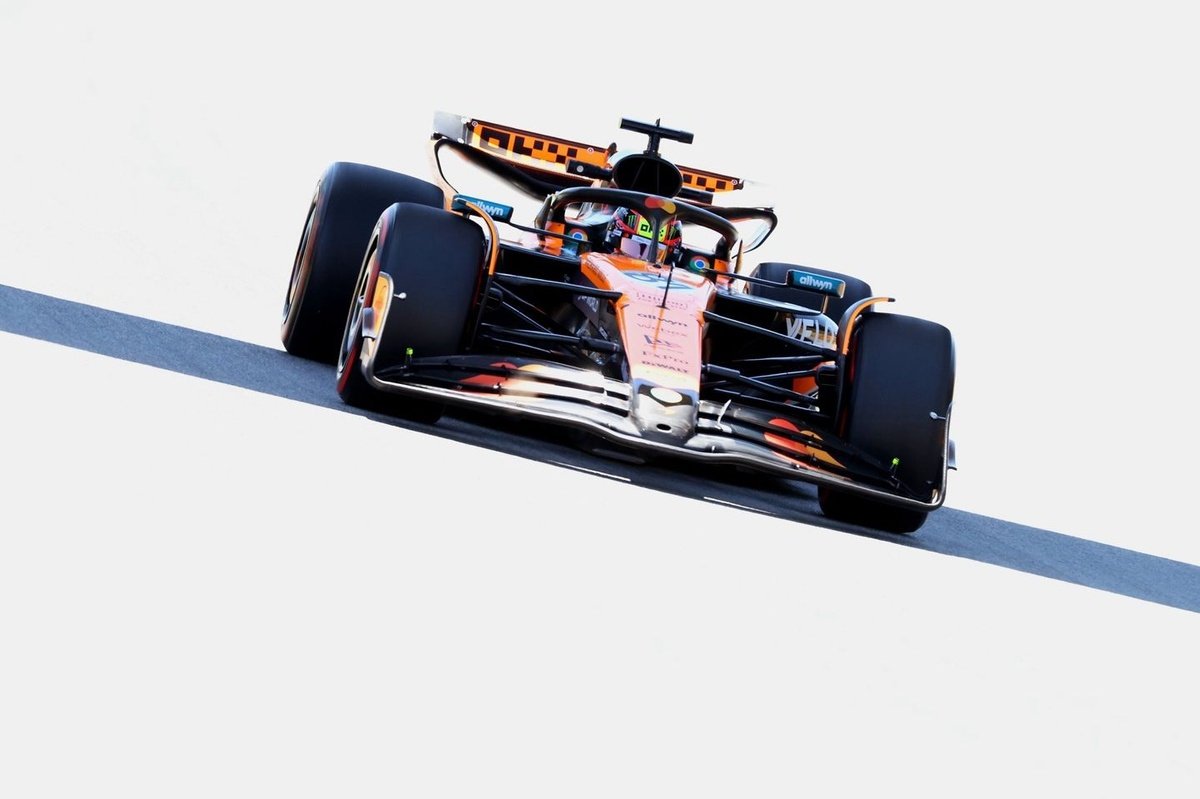
Spanish Grand Prix: Aero-Elastics and Competitive Context
In the lead-up to the Spanish Grand Prix, the motorsports community was abuzz with discussions about aero-elasticity, particularly in relation to McLaren’s performance. The FIA’s introduction of stringent wing stiffness tests aimed to address concerns over front and rear wing flexing has heightened scrutiny.
During Friday’s practice sessions, McLaren continued to dominate, with the team’s cars topping both sessions. This result, however, left many around the paddock, including rival team members, ambivalent about the impact of the newly implemented regulations. Mercedes’ George Russell sarcastically remarked, “It clearly slowed McLaren down a lot. So, yeah, good news,” reflecting the skepticism about the effectiveness of the recent changes.
Team Reactions and Insights
Despite expectations for an immediate reshuffle in competitive standings, notable drivers showed measured responses. Fernando Alonso commented, “I think the car feels similar,” while Esteban Ocon echoed similar sentiments regarding the lack of significant changes. Max Verstappen indicated that the effects of the new regulations were not surprising, stating, “If you look at the standings, not a lot.”
The underlying contention centers around claims from Red Bull management that McLaren’s recent performance advancements hinge on exploiting aerodynamic properties. However, Verstappen maintained that any disparity in competitiveness is more reflective of the RB21’s handling issues than the MCL39’s aero-elastic behavior.
Technical Insights
Aero-elasticity’s effects on car performance, while visually striking, are often subtle. The key benefits many teams seek—improved balance and performance adjustments—are overshadowed by broader aerodynamic dynamics. The flexing of a front wing may confer drag reduction but primarily serves to enhance vehicle stability through corners.
As teams navigate the complex landscape of newly enforced regulations, it’s important to acknowledge the variable nature of different circuits. Barcelona’s layout is considered favorable for Red Bull’s characteristics, complicating direct comparisons based purely on yesterday’s running.
Forward Outlook
With only one day of data available, determining the new regulations’ impact on the overall competitive landscape remains challenging. As Ferrari’s team principal Frederic Vasseur noted, significant lap time disparities among teams were not anticipated. The forthcoming sessions will be critical in providing more clarity as teams adapt to the evolving technical landscape.
As we move toward the main event, the interplay between new regulations and team strategies will undoubtedly shape the narrative of the weekend, offering fans and analysts alike an intriguing spectacle to analyze.


