


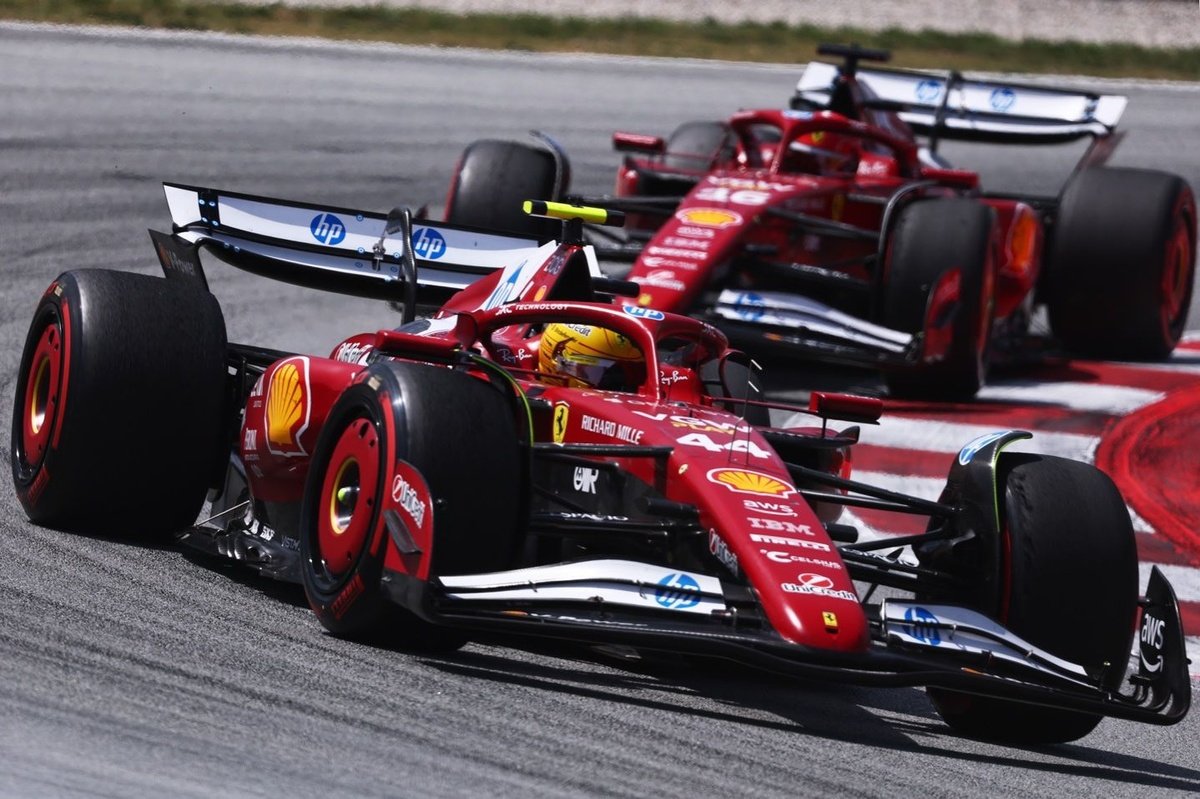
Spanish Grand Prix: Ferrari Poised for Second Place, But Struggles Persist
Barcelona, Spain – The 2025 Formula 1 Spanish Grand Prix proved crucial for Ferrari’s championship aspirations, as they secured a solid second place in the Constructors’ Championship. However, the anticipated advancements in competitiveness were notably absent, raising concerns for the Scuderia.
Ferrari’s performance benefited from placing both drivers in the top six, contrasting sharply with Mercedes and Red Bull, who fielded only one driver each in the top ten. Andrea Kimi Antonelli faced reliability issues, while Yuki Tsunoda’s challenges continued to perplex the Red Bull camp.
Despite their results, Ferrari remains cautious. The team’s technical updates, particularly regarding the newly mandated FIA front wing regulations, did not significantly close the gap to McLaren, which successfully introduced a stiffer wing at Imola. After implementing an upgrade, Ferrari still lags by three to four tenths of a second.
Key Race Insights
Charles Leclerc’s strategy to sacrifice qualifying for a presumed advantage in the race backfired. Running only one lap in Q3, he acknowledged post-race that relying on race pace rather than starting position is a flawed approach in modern F1. Without a safety car to alter race dynamics, he would have finished behind Max Verstappen.
Ahead of the Canadian Grand Prix, Ferrari will debut revisions, including a new floor and rear suspension. However, internal sentiment in Maranello is low; the SF-25 is regarded as subpar, with upcoming upgrades unlikely to transform its performance profile.
Lewis Hamilton underscored the urgency for a shift in focus to the next season, stating that “no upgrades will turn the season around.” Team Principal Frederic Vasseur remains the sole voice of optimism regarding current developments.
Looking Ahead
Ferrari faces a strategic dilemma: although the race for second place is still competitive, the impending 2026 technical regulations may call into question further investments in the SF-25. The team must balance immediate performance goals with long-term viability as the next era of Formula 1 approaches.
