


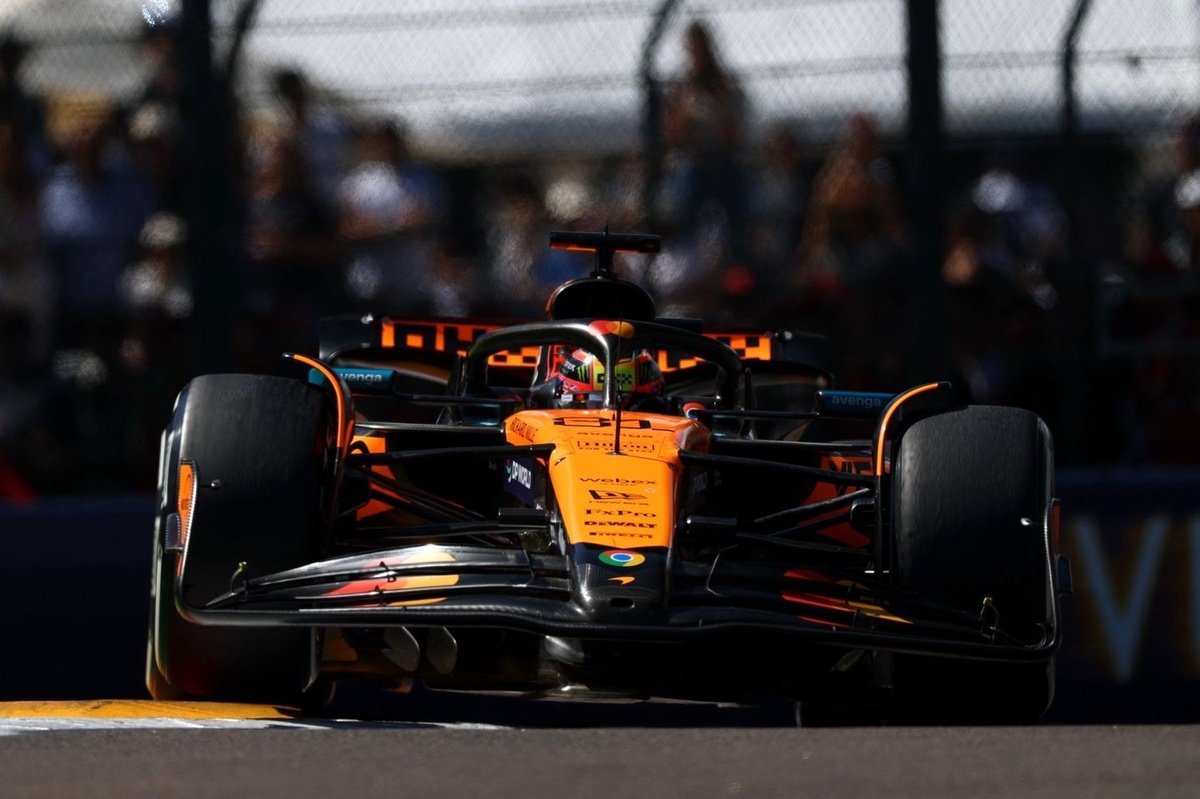
Imola Grand Prix Report: Verstappen’s Masterclass Defeats McLaren’s Strategy
In a dramatic turn of events at the Imola Grand Prix, Max Verstappen secured a hard-fought victory, overcoming an early lead by McLaren’s Oscar Piastri. After strong showings in practice and qualifying, expectations had favored the MCL39, but the race outcome highlighted Red Bull’s strategic acumen and tire management.
At the start, Verstappen executed a bold overtake around the outside of the Tamburello chicane, effectively seizing control of the race. "It was a perfect execution," he remarked post-race, reflecting on the team’s immense effort to adapt their strategy.
Key Performance Data:
- Lap Times (3-9):
- Lap 3: Verstappen – 1:21.258, Piastri – 1:21.345 (Difference: +0.087s)
- Lap 10: Piastri’s pace began to drop significantly, moving from competitive stints into tire graining issues.
As the race unfolded, Verstappen maintained consistent lap times while Piastri’s performance deteriorated after laps three to nine, which prompted McLaren to reassess their strategy. Red Bull Team Principal Christian Horner noted, “Oscar obviously pushed quite hard at the start… and you could see he was beginning to get a bit of graining.”
The high track temperatures of 45°C played a crucial role in tire management, exacerbating the thermal imbalances in McLaren’s tires. This issue resulted in a pivotal strategic shift, leading McLaren to implement a two-stop strategy that ultimately compromised Piastri’s chance for victory.
"At first, the tires felt like they were degrading quickly, but they still had more to give," McLaren’s Andrea Stella confirmed, indicating the decision was reactive rather than premeditated.
The decision to pit early meant Piastri faced the daunting challenge of overtaking seven cars that remained on a one-stop strategy after the virtual safety car caused by Esteban Ocon’s retirement. This added significant time to his race, further dimming his chances against Verstappen, who capitalized on a well-timed pit stop, rejoining the race with a comfortable lead.
Despite McLaren’s strong qualifying performance, their inability to manage tire wear effectively against Red Bull’s improved setup was telling. "We are competitive in slower corners while Red Bull has the edge in high-speed sections," Stella remarked, suggesting future races could favor their MCL39’s strengths.
As the season progresses, the implications of this race extend beyond mere statistics. Red Bull’s cautious optimism for their upgrades aligns with McLaren’s need to solidify their tire management strategies for upcoming venues. The battle between these two teams is expected to continue as they navigate the complexities of varying track layouts and conditions in the races to come.
