


Racing Bulls’ Path from Concept to Track: A Technical Analysis
The current landscape of Formula 1 has never been more competitive, as teams face minimal margins for error amid stringent regulations. Racing Bulls, having navigated the tight midfield landscape over the past 18 months, epitomizes this challenge. The team, based in Faenza with a presence in Milton Keynes, relies heavily on in-house expertise for its development processes.
Step 1: Aerodynamics
The aerodynamic design process commences with ideation among the aerodynamicists, primarily situated in Milton Keynes. In this new collaborative environment, the team leverages access to advanced wind tunnel facilities, crucial for aerodynamic validation. Matteo Piraccini, Racing Bulls’ operations director, emphasizes that each aerodynamic concept undergoes Computational Fluid Dynamics (CFD) evaluation to guide further testing.
"From an initial 10 aero ideas, only two or three move to wind tunnel testing. We subsequently aggregate the data to identify the optimal solution," Piraccini explains. This cross-departmental collaboration also involves the Vehicle Performance Group (VPG) to assess how new aero surfaces perform in a real-world context.
Step 2: Design
Following aerodynamic assessment, the concepts transition to the design phase at the Faenza facility. Here, engineers not only shape the aerodynamics but also ensure compliance with the FIA’s stringent structural integrity requirements. The recent update to front wing regulations exemplifies this, as all teams must adjust their designs to meet new load tests. "We must balance aerodynamic goals with regulatory compliance," Piraccini states.
The design process is synchronized to accommodate both the intricate geometry of parts and the integration of essential components like cooling systems and sensors.
Step 3: Production
This phase is characterized by an overlap with design work to expedite the time from concept to race. Production starts as soon as critical designs are ready, ensuring that parts such as front wings are available for upcoming races.
Carbon fiber components undergo a meticulous curing process in autoclaves, where temperature and pressure are controlled to optimize their strength-to-weight ratio. "Production does not wait idle for completed designs; we manage information closely to cut down the time to race," Piraccini notes.
Production quantities vary based on the circuit’s demands, such as for Monaco’s high-downforce requirements, impacting the number of wings produced.
Step 4: Quality Assurance
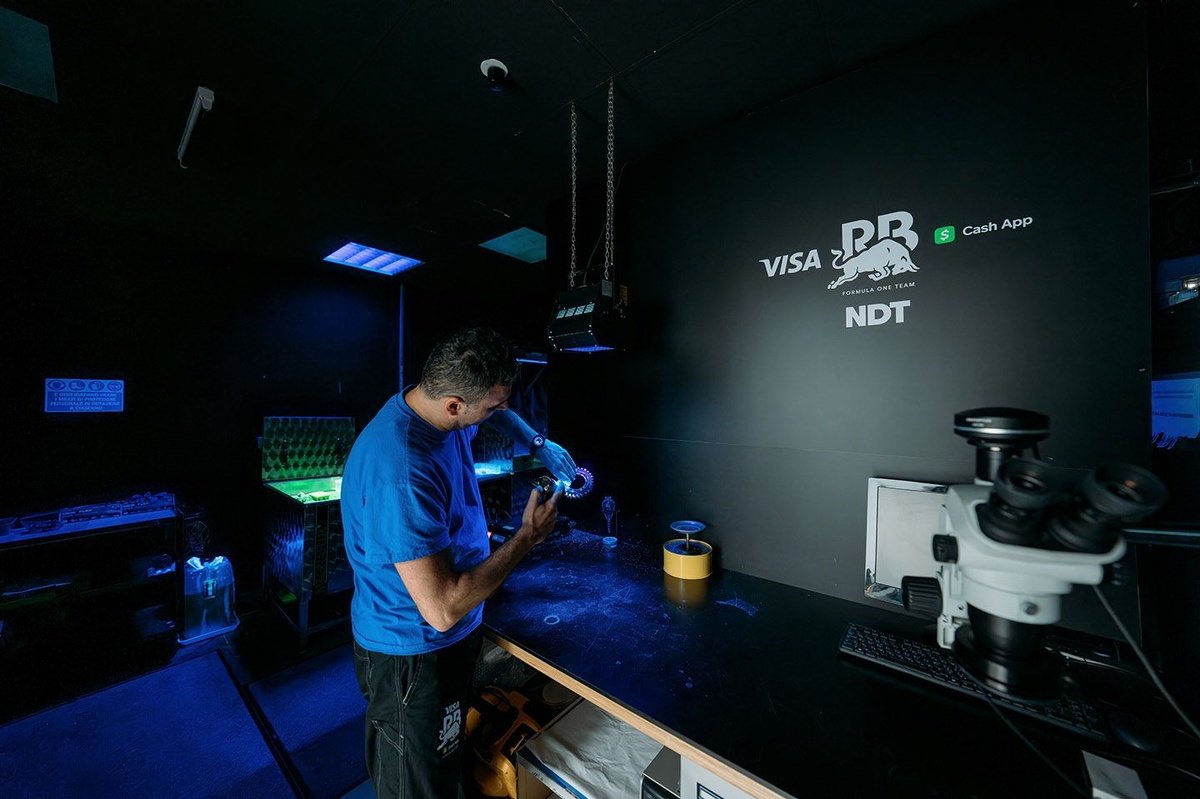
Quality control is integral throughout the development process, encompassing both dimensional checks and integrity assessments. Each part is subjected to destructive and non-destructive testing procedures before being integrated into the car. Piraccini underscores the importance of early detection of potential issues: "If we can identify a problem during production, it avoids larger setbacks later."
Step 5: Assembly
The final assembly phase involves integrating sub-assemblies, including suspension systems and the front wing. The team utilizes a home advantage at Imola, as the proximity allows them more time to refine the cars before races.
As Racing Bulls adapts to the rapid pace of Formula 1 innovations, the emphasis on efficiency and effective communication remains paramount. Each phase of development is meticulously orchestrated, ensuring that every millisecond contributes to the team’s competitive edge.
