


IMSA’s Rolex 24 At Daytona: A Year of Growth and Competitive Grids
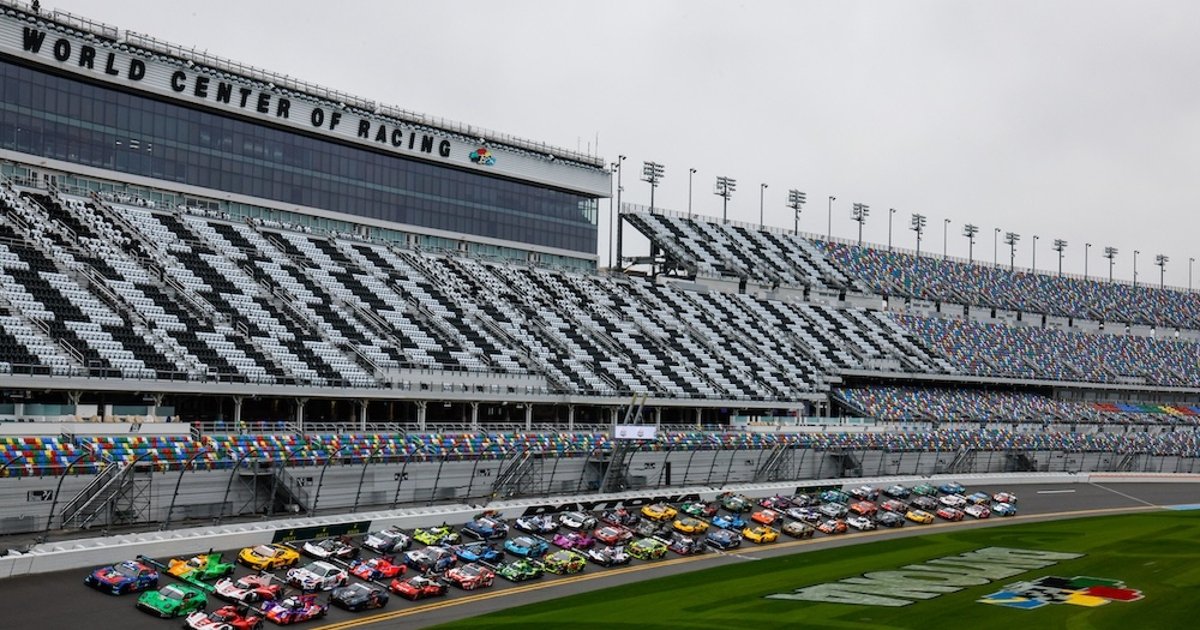
The 2024 Rolex 24 at Daytona is set to showcase a robust field of 61 entries, marking the fourth consecutive year IMSA has reached peak capacity for this marquee endurance race. This marks a significant turnaround from just 38 cars at the start of the decade, highlighting IMSA’s strategic alignment with global racing regulations and manufacturers’ increasing participation.
In 2020, the race featured only 13 prototypes split among four classes. The DPi category had eight entries, while GTD was the largest with 18. However, by 2021, participation surged to 49 cars—a nearly 29% increase—and a remarkable 61 entries were recorded in 2022. The grid fluctuated slightly in 2023 and 2024 but ultimately returned to the full capacity of 61 entries in 2025.
IMSA CEO Ed Bennett highlighted the importance of this growth, stating, “We’ve had this trend of being completely full to capacity, and you’ve got people on a waitlist.” He emphasized the goal of balancing prototype and GT entries, ideally aiming for an equal split.
The shift from DPi to the hybrid GTP platform has fueled this resurgence, attracting nine manufacturers interested in the LMDh specifications, which enable a blend of performance between GTP and the FIA WEC’s Hypercar category. Bennett noted, “Holding fast to the LMP2-based roots of DPi, but with new hybrid powertrains, has been a game-changer.”
The transition from GTLM to GT3 regulations has further bolstered participation in the GT categories. The 2021 Rolex 24 witnessed a decline in GTLM entries, but that number doubled to 13 the following year after the shift to GT3 specifications. This change has resulted in IMSA achieving sustained high entry counts throughout the season.
John Doonan, IMSA’s President, remarked on the evolution of the series, stating, “When we made the transition to globally homologated cars, it created a sense of stability.” This stability has attracted diverse manufacturers and ensured a competitive grid.
As manufacturers like Lamborghini, which will pause its LMDh program, and newcomers like Hyundai’s Genesis seek involvement, IMSA is positioned for continued growth. The strategic alignment with global racing organizations has set a clear path for the future of endurance racing in North America.
Bennett concluded, “We serve at the pleasure of our members,” emphasizing the importance of collaboration and feedback in shaping IMSA’s direction. With its current momentum, the Rolex 24 and the WeatherTech Championship exemplify a successful model in endurance racing.
