


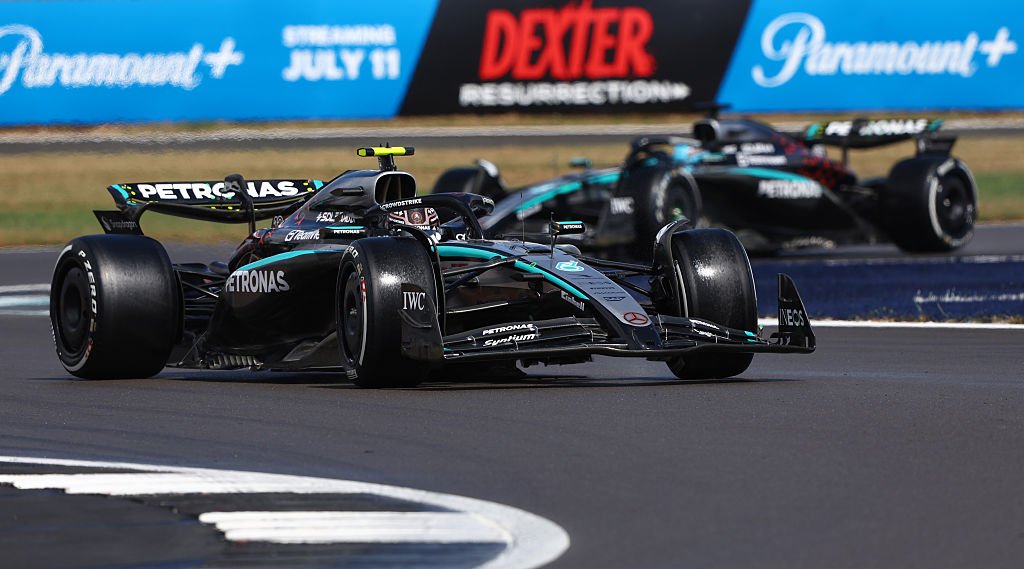
Mercedes Investigates Suspension Upgrade Impact After Hungarian GP Podium
Mercedes is conducting an in-depth investigation into the effects of a suspension upgrade introduced at the beginning of the European season, which seems to have adversely impacted the team’s performance. Following its removal at the Hungarian Grand Prix, George Russell secured a third-place finish, marking Mercedes’ first podium in Europe this season after previously winning in Montreal.
Team principal Toto Wolff posited that the initial success in Canada may have delayed the decision to discard the problematic suspension setup, which ultimately led to a more predictable car at the Hungarian track. “We tried to solve a problem with a mechanical upgrade [at Imola], which may not have addressed the issue but instead introduced instability,” Wolff stated. He acknowledged that this instability compromised driver confidence and highlighted the misalignment between their simulation predictions and real-world performance.
Additionally, Wolff emphasized the need for accurate correlation between digital simulations and actual car dynamics, describing it as a prevalent challenge in the Formula 1 landscape. “Upgrades should enhance performance, yet our findings require us to revert to testing on track to validate results,” he explained.
Andrew Shovlin, trackside engineering director, elaborated that while some components of the new suspension showed potential for improved speed, they failed to deliver the necessary stability in high-speed corners, hindering driver confidence. “Our objective is always to enhance car pace, but this particular upgrade did not yield expected results,” Shovlin noted. He affirmed that ongoing analyses from this incident will inform both current developments and future designs for the 2026 car.
In summary, the retraction of the suspension upgrade illustrates significant learning opportunities for Mercedes, emphasizing the complexities of modern Formula 1 engineering and the paramount importance of aligning digital simulation tools with on-track realities.
