


Madrid Prepares for 2026 Spanish Grand Prix Amid Local Opposition
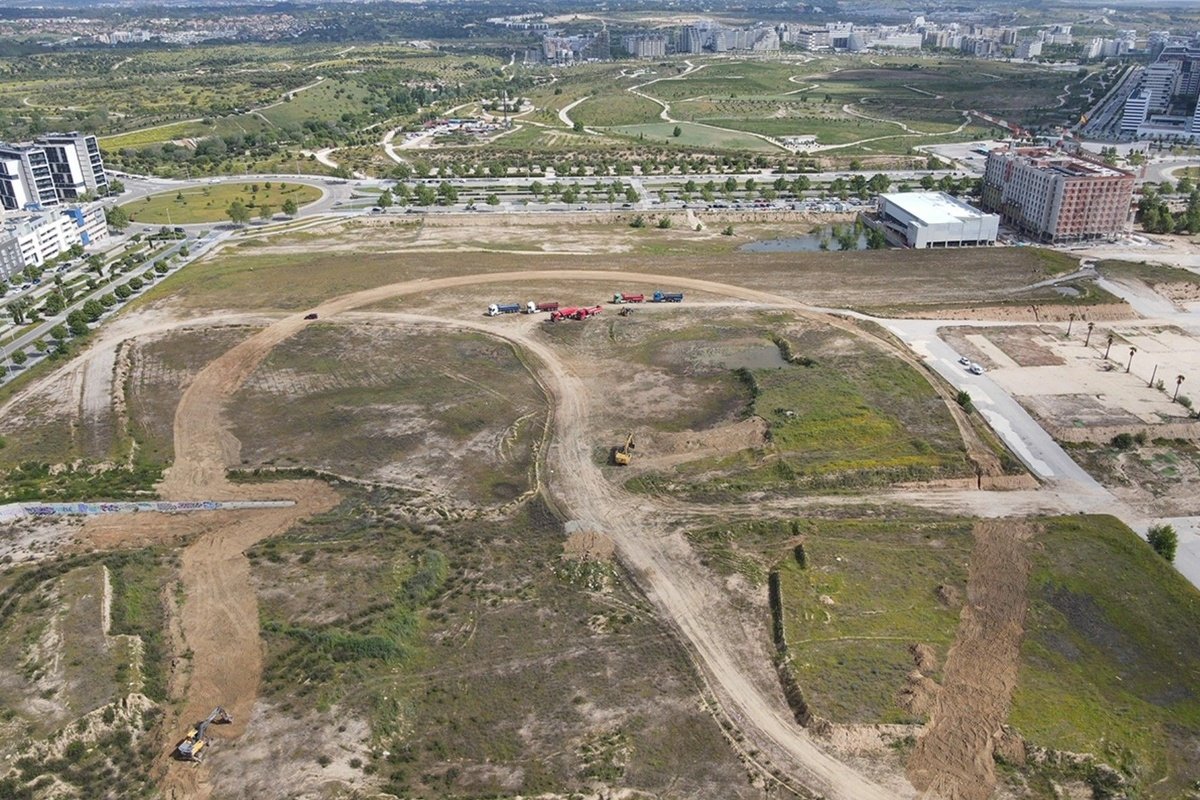
Madrid, Spain – As the countdown to the 2026 Formula 1 Spanish Grand Prix begins, organizers are intensifying efforts to deliver the new Madring circuit on schedule, facing both logistical challenges and local opposition. Construction commenced just over a month ago and is set to debut next September, featuring a hybrid circuit that combines existing streets with a purpose-built section around the IFEMA fairgrounds and Real Madrid’s Valdebebas training complex.
A key feature of the track is La Monumental, a steep, banking turn that will be lined by a grandstand. “We’ve already excavated three-and-a-half meters of the six needed,” said an IFEMA representative, with the turn featuring a 24% banking over 540 meters. Luis Garcia Abad, Madring’s general manager, emphasized the complexity of the project: “It’s going to be quite a beast of a turn.”
Currently, approximately 85 workers are on-site, a number expected to rise to 400 as construction progresses. The goal is to move 700,000 cubic meters of earth, with day shifts capable of shifting up to 13,000 cubic meters daily. Notably, the project is ahead of schedule, with completion in the Valdebebas area anticipated by August, a month earlier than planned.
Track Design Innovations
Spearheading the design, Garcia Abad has assured that the new venue will not inherit track limits controversies plaguing other circuits. “This circuit is being built with the idea of banning track limits issues,” he stated. Moreover, Spanish F1 driver Carlos Sainz serves as the official ambassador, actively contributing to the design improvements, which have already prompted reviews of several corner entries.
As the new regulations for 2026 are still being finalized, creators are cautious in simulations. “We can’t use today’s cars because the regulations change in 2026, and nobody knows what they will be like,” Garcia Abad noted.
Navigating Local Resistance
Despite progress, the project is not without controversy. The regional Mas Madrid party has launched a legal challenge against the circuit’s construction license, claiming environmental regulations were bypassed. Local residents express concerns over noise and disruptions, particularly given the circuit’s annual events scheduled until at least 2035.
In response, organizers have pledged to prioritize community integration and sustainability, holding monthly meetings with local residents to address concerns. "The streets won’t be closed for five months as claimed—only during race days,” assured the circuit director, noting plans for discounted tickets for affected neighbors.
As construction continues toward the FIA’s homologation deadline of May 30, 2026, the future of Madrid’s F1 circuit is poised at a critical intersection of ambition and community sentiment, illustrating the intricate balance needed to host a major international motorsport event.
