


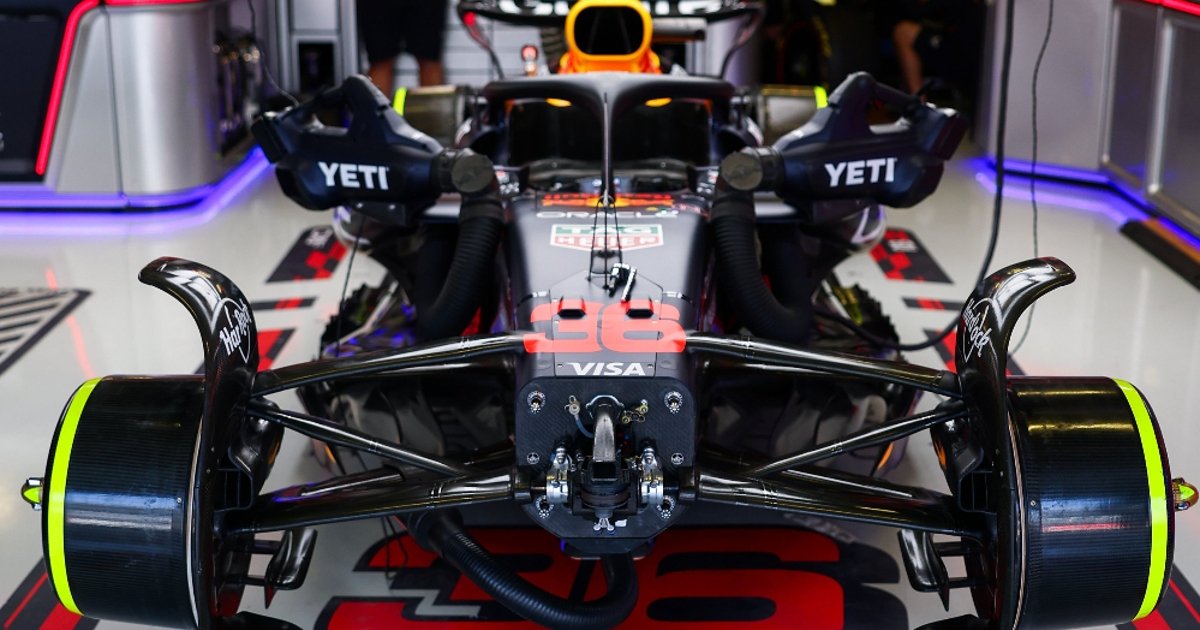
Red Bull Enhances Performance with Upgrades Ahead of Mexico City Grand Prix
As the Formula 1 season reaches a critical juncture, Red Bull Racing is implementing crucial upgrades to optimize Max Verstappen’s performance at the Mexico City Grand Prix. In a concerted effort to close the gap on Oscar Piastri’s championship lead, Verstappen has capitalized on recent improvements, amassing 64 points in the last four races since the introduction of a new floor design in Monza.
At the Autódromo Hermanos Rodríguez, Red Bull will debut another floor upgrade, finely tuned for the high-altitude conditions that demand rigorous cooling strategies. The update features an enhanced upper surface at the rear of the outer floor fence and adjusted sidepod profiles, which aim to improve reliability and cooling capacity. Red Bull noted, “These modifications provide a cooling benefit while also offering a slight increase in load.”
Additional enhancements include enlarged brake ducts and a refined floor edge design, described as a subtle adjustment that enhances load extraction without compromising flow stability. These changes reflect Red Bull’s commitment to maintaining competitive edge and reliability under challenging conditions.
Ferrari is also focusing on developments aimed at enhancing reliability, incorporating new bodywork exit louvers and larger rear brake ducts to address cooling needs. However, these updates come with a trade-off in aerodynamic efficiency, as the thinner air at over 7,200 feet necessitates increased airflow through the vehicle to cool the brakes and power units.
Other teams, including Alpine, Williams, and Sauber, are making similar adjustments to their cooling systems. Notably, McLaren, Mercedes, Aston Martin, and Haas are refraining from introducing new components for this weekend’s race, indicating varying strategies as the championship race continues to unfold.
As the teams prepare for qualifying, Red Bull’s proactive approach to car upgrades positions them favorably in the championship battle, while rival teams must balance reliability with performance efficiency in the unique conditions of the Mexico City circuit.
