


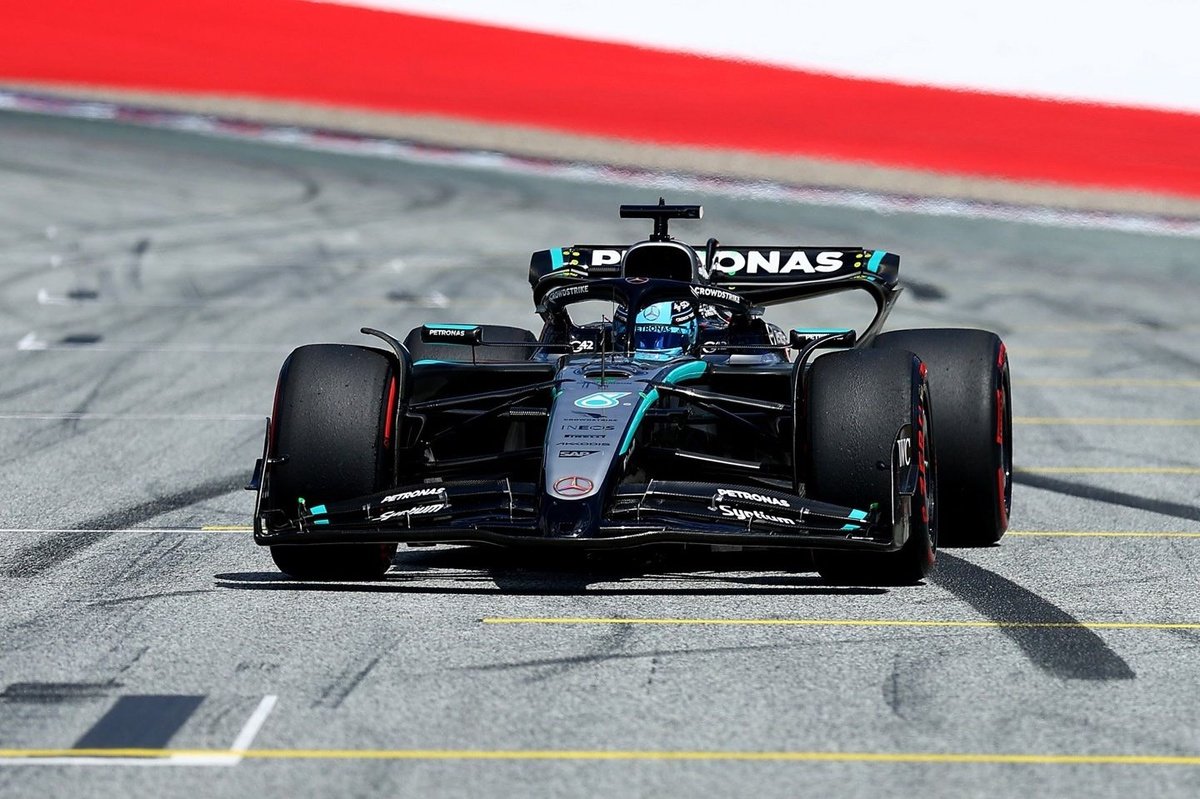
Austrian GP Report: Mercedes Faces Overheating Challenges
Spielberg, Austria – The Austrian Grand Prix marked a significant regression for the Mercedes-AMG Petronas Formula One Team, as George Russell finished fifth, over a minute adrift of the dominant McLaren duo. After celebrating victory in Canada, the team struggled with severe tyre overheating issues, reminiscent of past struggles in hot climates, notably in Jeddah and Imola.
In a race where Ferrari upgraded their package to secure the ‘best of the rest’ title, Mercedes found themselves battling the midfield rather than contesting for podiums. Russell’s race was characterized by a lack of pace, finishing just five seconds ahead of the next closest competitors.
“I was expecting a bad race and it was worse than I could imagine,” Russell remarked, emphasizing the stark contrast between their performance in Canada and the overheating issues faced at the Red Bull Ring. “The team has been working hard for six months now to try and solve this issue. We’ve got ideas, but nothing that’s making major headway right now.”
Technical Insights on Tyre Management
Mercedes’ difficulties were particularly pronounced on the track’s demanding surface, which contributed to overheating. Despite experiencing asphalt temperatures near 50°C in Canada, the car had thrived; however, Austria’s combination of high-speed sections and challenging long corners exacerbated their woes.
During qualifying, Mercedes showed potential in straight-line performance but faltered in long corners, especially at Turn 9, where competitors outpaced them significantly. Toto Wolff, Team Principal, noted the need for a rethink in their setup: “We could have used last year’s setup and maybe, I don’t know, we would have finished on the podium,” he admitted, revealing a key strategy misstep.
Contributing Factors and Future Directions
The unique characteristics of the Austrian circuit—composed of aggressive braking zones and high-energy corners—created a "perfect storm" for the team, intensifying tyre thermal degradation and affecting overall race pace. Wolff reflected on the experimental approaches taken during the race weekend, signaling a willingness to innovate despite adverse outcomes.
“The only positive takeaway from this weekend is that we tried something extreme: in Montreal it worked, but here it didn’t,” he asserted, underscoring the importance of adjusting their development strategy as they fix the underlying issues.
The Austrian Grand Prix was both a stark reminder of the challenges Mercedes faces this season and an important lesson in setup optimization as they prepare for upcoming races. The team’s focus will shift to addressing their tyre management shortcomings, an essential goal if they hope to remain competitive throughout the remainder of the campaign.
